Translator Rental Logistics Case: Cross-Border Delivery Stabilized
How a Translator Rental Business Stabilized Cross-Border Delivery Using U.S. Local Warehousing
Industry: Cross-border services / Language equipment rental
Client Role Perspective: Operations manager responsible for overseas fulfillment reliability
Client Industry and Business Background
The client operates in the translator rental and language service equipment sector, supporting international business activities such as cross-border transactions, travel, and multinational events. Its business model depends on short-cycle equipment rental, frequent cross-border shipments, and reliable overseas returns.
As demand increased, the operations team faced growing pressure to ensure that rental devices could be delivered and returned on time, without loss, damage, or inventory mismatches—conditions critical to sustaining service continuity.
The Problem Itself
Before the project began, the client’s operations were constrained by several structural issues typical in cross-border equipment logistics cases:
- Rental translators were stored centrally, creating long international delivery lead times.
- Inventory visibility was limited, making it difficult to confirm availability across overlapping rental periods.
- Manual coordination across customs clearance, international shipping, and overseas last-mile delivery increased error risk.
These limitations affected the business directly:
- Delivery uncertainty increased the risk of missed rental start dates.
- Order errors and delayed returns raised operational costs.
- Scaling into additional markets amplified coordination complexity rather than reducing unit cost.
Why This Solution Was Chosen
From an operations management perspective, the client prioritized execution reliability over theoretical optimization. The chosen approach focused on restructuring fulfillment through a translator rental supply chain anchored in localized operations.
Key Components Adopted
- U.S. local warehousing fulfillment to shorten delivery distance to North American customers.
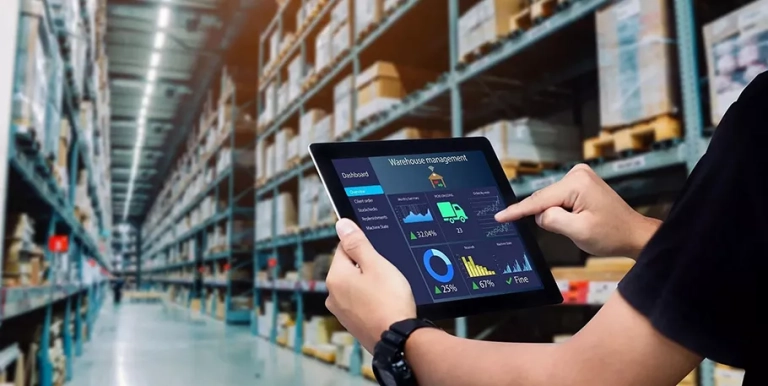
- A WMS-enabled inventory system providing real-time visibility of rental devices.
- Multi-channel order processing capable of handling overlapping SKUs and rental rules.
- Integrated coordination for cross-border inbound shipments and overseas outbound distribution.
Selection Logic
The client selected this model because it differed from traditional freight-forwarding approaches:
- Inventory was managed as an operational asset, not just cargo.
- Order accuracy was system-driven rather than dependent on manual checks.
- Local execution reduced reliance on time-sensitive international express shipping.
For the operations manager, this meant fewer emergency interventions and clearer accountability across the fulfillment chain.
Results That Spoke for the Business
While the project did not aim for aggressive short-term optimization, several measurable and observable outcomes emerged after implementation:
- Delivery timelines became more predictable for North American rentals.
- Order handling errors decreased due to WMS inventory accuracy logistics and standardized picking workflows.
- The client was able to support higher order volumes without proportionally increasing manual coordination.
The causal relationship was clear: localized inventory and systemized execution reduced uncertainty inherent in cross-border rental fulfillment.
Client Evaluation and Replicability
From the client’s internal review, the primary value was not speed alone, but operational stability. The operations team noted that fewer exceptions allowed them to focus on service planning rather than daily issue resolution.
This case is particularly referenceable for:
- Equipment rental businesses with frequent cross-border circulation.
- Service providers managing high-SKU, rule-based order fulfillment.
- Teams evaluating multi-SKU order processing logistics in overseas markets.
The approach does not eliminate complexity, but it redistributes it into systems and local execution—an insight transferable to similar international service operations.
Key Takeaways for Decision-Makers
- Local warehousing can be a risk-control tool, not just a cost decision.
- Rental models amplify the value of accurate, real-time inventory data.
- Scalability often depends more on execution design than shipping speed.
More success stories